
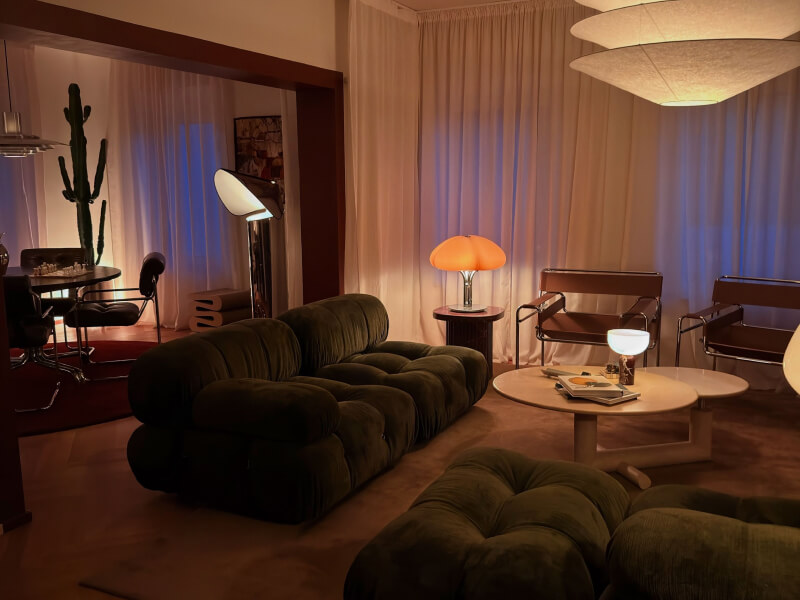
Source: kaiboet on Instagram
Table of Contents
Interior Color Trends 2026 are moving beyond the cool grays and overly neutral palettes that dominated homes for years. This year, designers and homeowners are embracing warmer neutrals, earthy greens, rich browns, atmospheric blues, deep reds, and more expressive color combinations.
The biggest change isn’t simply which colors are trending. It is how color is being used. Instead of treating color as an occasional accent, modern interiors are using it to create atmosphere, define architectural features, and express personality.
According to a 2026 survey of interior design professionals, restorative greens, nature-inspired neutrals, and deep browns and khakis are among the strongest color directions for the year. Color drenching is also becoming increasingly popular as homeowners look for more immersive interiors.
If you’re planning to refresh your home this year, these are the top interior color trends for 2026 worth knowing.
1. Warm Neutrals Are Replacing Cool Gray
One of the clearest interior color trends 2026 is the continued move away from cool, blue-based gray.
Instead, designers are choosing warmer shades such as:
- Taupe
- Mushroom
- Greige
- Sand
- Caramel
- Warm beige
- Khaki
- Soft brown
These colors create a more welcoming atmosphere and work beautifully with natural materials such as wood, stone, linen, and wool.
Warm neutrals are particularly effective in living rooms and bedrooms because they create a relaxed foundation without feeling stark or clinical. Designers are also increasingly using richer neutrals instead of plain off-white to give modern spaces more depth.
How to use them
Try a warm taupe wall with a cream sofa, walnut furniture, and textured beige textiles. The result is sophisticated without feeling overly decorated.
2. Restorative Greens Bring Nature Indoors
Green continues to be one of the most important colors in interior design trends 2026.
From soft sage to deep olive and smoky eucalyptus, green connects interiors with nature while adding personality.
A 2026 industry survey found that restorative greens were the most popular interior color palette among surveyed designers, with 66% selecting them as a major trend.
Popular variations include:
- Olive green
- Moss green
- Sage
- Eucalyptus
- Forest green
- Smoky jade
- Deep earthy green
Green works particularly well with walnut, brass, limestone, and cream.

How to use it
For a subtle approach, introduce green through an accent chair, curtains, artwork, or cushions. For a more dramatic look, use a deep olive or forest green across the walls and cabinetry.
3. Rich Brown Is Becoming the New Luxury Neutral
Brown is having a major moment in 2026 home decor trends.
Rather than the dated brown interiors of previous decades, today’s interpretation is richer, more sophisticated, and heavily influenced by natural materials.
Think:
- Chocolate brown
- Espresso
- Walnut
- Tobacco
- Dark umber
- Mocha
- Caramel
These shades work especially well with quiet luxury and organic modern interiors.
Brown can also replace black when you want contrast without creating an overly harsh effect. Design experts surveyed by Fixr noted that rich earthy browns are increasingly being used for their comfort, depth, and association with quiet luxury.
How to use it
Pair chocolate brown furniture with cream walls, or use dark brown cabinetry with warm stone countertops.
4. Earthy Terracotta and Clay Tones
Terracotta continues to influence 2026 interior color trends, bringing warmth and Mediterranean character into contemporary homes.
These colors range from soft clay and muted terracotta to burnt orange and reddish brown.
They work particularly well with:
- Natural wood
- Cream
- Beige
- Olive green
- Brass
- Limestone
Terracotta doesn’t need to dominate an entire room. A terracotta rug, ceramic vase, accent chair, or artwork can introduce warmth without overwhelming the space.
For a more sophisticated result, choose muted, dusty versions rather than highly saturated orange.
5. Moody Blues Are Getting More Atmospheric
Blue remains a popular choice, but the direction is changing.
Instead of bright or icy blues, modern interior color trends are moving toward atmospheric shades with gray, green, or charcoal undertones.
Think:
- Charcoal blue
- Smoky blue
- Deep teal
- Dusty navy
- Muted sapphire
- Soft blue-gray
These colors work particularly well in bedrooms, studies, dining rooms, and cozy living spaces.
Charcoal blue is also emerging as an elegant alternative to traditional navy in kitchens, offering depth while maintaining a contemporary appearance.
6. Deep Reds and Burgundy Add Sophistication
Red is returning to interiors, but not necessarily as a bright primary color.
In 2026, designers are gravitating toward more sophisticated variations such as:
- Burgundy
- Wine
- Merlot
- Oxblood
- Brick red
- Muted berry
These colors create warmth and drama while fitting naturally into traditional, contemporary, and eclectic interiors.
Use deep red selectively in dining rooms, libraries, bedrooms, or living rooms.
A burgundy sofa or pair of dining chairs can become a powerful focal point against warm neutral walls.

7. Soft Yellow and Ochre Bring Optimism
Yellow is another color appearing in home color trends 2026, but today’s versions are softer and more sophisticated.
Instead of bright lemon yellow, designers are exploring:
- Ochre
- Butter yellow
- Golden yellow
- Muted mustard
- Honey
- Soft marigold
These shades can make darker rooms feel warmer and more inviting.
They work particularly well with brown, cream, olive, and natural wood.
8. Dusty Rose and Mauve Are Becoming New Neutrals
Pink is also becoming more sophisticated.
Instead of highly saturated pinks, today’s interiors are embracing dusty rose, mauve, pinky taupe, and earthy blush.
These shades bring warmth without feeling overly feminine.
Mauve, in particular, is being reconsidered as a versatile neutral that can work with both earthy and contemporary palettes.
Try dusty rose with chocolate brown, cream, olive, or warm gray for a sophisticated combination.
9. Color Drenching Is Changing How We Use Color
One of the most important interior design trends 2026 isn’t a specific shade—it is a decorating technique.
Color drenching means covering multiple surfaces in the same or closely related color, including walls, trim, doors, and sometimes the ceiling.
The result is an immersive, cohesive environment.
The technique has continued gaining momentum in 2026 because it makes rooms feel more intentional and can create a calming, enveloping effect.
For example, imagine a bedroom where the walls, ceiling, doors, and built-in cabinetry are all painted in a deep olive green.
Instead of looking monotonous, the single-color treatment allows furniture, artwork, and textures to stand out.
10. Unexpected Color Combinations Are Taking Over
Perhaps the most exciting of the interior color trends 2026 is the willingness to experiment.
Designers are increasingly combining colors that might initially seem unusual together.
Some combinations to try include:
- Chocolate brown + periwinkle
- Olive green + terracotta
- Burgundy + blush
- Deep blue + caramel
- Sage + warm yellow
- Teal + dusty rose
The key is balance.
If one color is highly saturated, use a softer or more neutral version of the second color. This keeps the room visually sophisticated rather than chaotic.
How to Choose the Right 2026 Color Palette for Your Home
Following color trends 2026 doesn’t mean you need to completely redesign your home.
Start by considering three things:
1. Natural Light
A dark room may benefit from warm, lighter colors, while a bright room can handle deeper shades.
2. Existing Materials
Look at your flooring, furniture, countertops, and wood finishes before choosing paint.
3. Mood
Ask yourself how you want the room to feel.
For calm, consider sage or muted blue.
For warmth, choose terracotta or caramel.
For sophistication, try chocolate brown or burgundy.
For a natural atmosphere, olive and earthy neutrals are excellent choices.
Final Thoughts on Interior Color Trends 2026
The biggest lesson from the interior color trends 2026 is that modern homes are becoming warmer, more personal, and more expressive.
Cool gray is giving way to earthy neutrals. Greens are creating stronger connections with nature. Brown is becoming a sophisticated luxury neutral, while burgundy, terracotta, yellow, and dusty pink bring personality to contemporary spaces.
At the same time, techniques such as color drenching are changing how homeowners think about using color.
You don’t need to embrace every trend. Choose the shades that complement your architecture, lifestyle, and existing décor. The best modern interiors aren’t simply trendy—they feel personal, comfortable, and timeless.
Leave a Reply